Archive for February, 2026

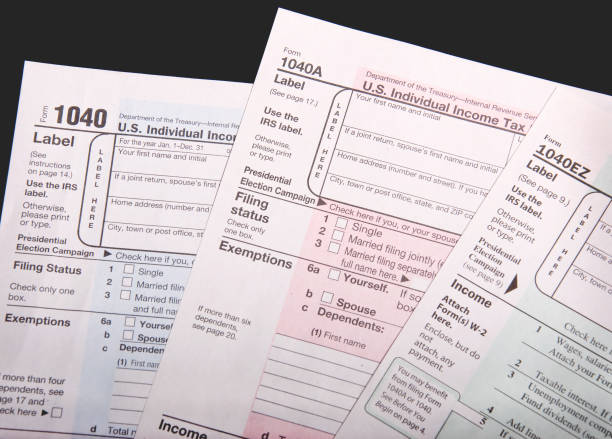
STOP STEALING MY TAXES

I pay federal taxes every year — on time and without complaint. In return, I expect the government to spend that money as the Constitution requires: through Congress, through debate, and through lawful appropriation. Instead, we have entered a war costing more than $1 billion a day without congressional authorization for either the fighting or the funding. That is not governance; it is abandonment of process.

I pay for a government built on expertise and accountability — one that keeps our cars safe, our skies monitored, our food inspected, and our air and water protected by science, not politics. I expect investment in research, education, and a basic commitment to the elderly, the disabled, and the vulnerable. Above all, I expect my tax dollars to reflect democratic consent — not to finance an unauthorized war never sanctioned by Congress.

But this is not just about expectations. It is about structure. It is about the Constitution.

Article I of the Constitution vests the power of the purse in Congress which writes the laws. Congress appropriates the funds. Congress decides what programs exist and how they are financed.

Article II charges the President to “care” that the laws be faithfully executed — not selectively delayed, not quietly dismantled, not reinterpreted out of existence.

This is not a partisan complaint. It is a structural alarm. If Article I is ignored and Article II is untethered from its obligation, then representation becomes theater and taxation becomes extraction without accountability. And that is not the republic we were promised.

We have tried the polite and traditional methods of protest. We have marched in the streets with handmade signs and clever slogans. We have filled public squares and listened to speeches about “norms” and “institutions.” We have boycotted Tesla dealerships. We have watched television commentators debate the erosion of democratic guardrails. We have written letters to our representatives, signed petitions, posted statements, and waited for someone in power to rediscover their spine. Nothing changes.

Here is an action plan. We pay taxes supposedly to get certain government services and many of these services are now cut. We are not getting what we paid for. WE MUST STOP PAYING TAXES until the government begins funding programs that were previously funded by Congress.

We cannot do this individually. There were 165 million individual tax returns filed last year. We need a massive protest and coordinated effort to end this current government. The Last No Kings Protest drew between 7 and 10 million people. The next NO Kings Rally scheduled for March 28is expected to draw up to 20 million people. This is good starting point. Speakers at these rallies should remind people to hold back on filing their returns this year. Let’s deny this government trillions of our hard-earned dollars so they can no longer ignore established funding laws and do what they wish with our tax dollars.

WE STOP PAYING ALL TAXES BEGINNING APRIL 15, 2026. This is the Resistance Movement to this corrupt and illegal government. This only works if millions of Americans who oppose the current administration join forces and collectively stop paying taxes. One person stops paying taxes and they get fined. Several people stop paying taxes and they get rounded up. Millions stop paying taxes and we have a movement. We cheer the Colonialists for 250 years who in Boston threw the tea into the sea because they had no representation. Let future generations cheer us as they learn that we stopped paying taxes to a corrupt regime and brought them to their knees by refusing to pay our taxes until we were represented in this government.
EPSTEIN -AI CONSPIRACY THEORY, Part 2

To the Russians, Epstein’s ring wasn’t a scandal — it was an opportunity – in Moscow’s playbook, kompromat. When word filtered through financial backchannels that an American fixer had assembled a group of senators, tech barons, princes, generals and media kings, the Russian power brokers saw a once-in-a-generation “influence” jackpot. Russian money flowing through Epstein wasn’t just about dirty cash looking for a wash — it was portrayed as a classic kompromat investment. The oligarch-linked funds were routed into Epstein’s shadowy financial empire as a way to buy access, influence, and leverage over Western elites. By quietly bankrolling parts of Epstein’s operation and feeding it dirty money to launder, they weren’t just earning returns — they were buying selective access to pressure points. A threat delivered through intermediaries could stall sanctions or open defense contracts. Epstein’s ring became a privately run kompromat warehouse. It was a very easy way to gain influence in the West.

The money laundering was still an important way to finance Epstein’s operations. Dirty money from oligarchs, corrupt officials, arms deals, and offshore tax dodges poured in like fuel, and Epstein’s web of shell funds, fake hedge vehicles, art flips, and inflated real estate deals turned it into pristine Western wealth that could buy mansions, jets, politicians, silence, and expansion. Every compromised billionaire fed the machine, every laundered dollar funded new properties, new recruiters, new surveillance, new protections. This money paid for lawyers who made charges vanish, donations that made universities look away, and “investments” that turned predators into respected philanthropists. Epstein connections covered a broad spectrum of highly influential institutions. Taking him down wouldn’t have revealed just one criminal operation; it would have blown open a massive network involving major banks, politicians, and billionaires.

The Russian influence didn’t just involve money. Once the oligarchs got involved, Epstein’s circle gained access to young women through modeling agencies, “talent scouts,” and social networks in Eastern Europe and the former Soviet states — places already known for trafficking pipelines targeting young women looking for work abroad. Many young girls and women were lured with promises of modeling jobs, travel, or wealthy connections, while others were quietly coerced through poverty, fake visas, or shady intermediaries.

But the Russians weren’t the only foreign influence in the Epstein circle. Ghislaine Maxwell’s father, Robert Maxwell — a powerful media tycoon who had close ties to Israeli intelligence. Ghislaine didn’t just bring social connections into Epstein’s world; she brought an intelligence playbook. Epstein’s operation is framed as a modern honey-trap network — gathering kompromat on politicians, CEOs, scientists, and military figures. The kompromat could be used to shape arms deals, foreign policy votes, tech transfers, or diplomatic decisions behind the scenes.

The Epstein ring was a horrendous crime hiding in plain sight. The damn was beginning to crack as local police kept hearing of the steady stream of underage girls being ferried in and out of Epstein’s mansion. What started as scattered parent complaints slowly morphed into a quiet, methodical investigation as officers tracked recruitment networks, phone logs, and cash payments that suggested something far larger than a rich man’s private indiscretions. The sheer volume of victims made the cover-up impossible to fully contain. The Epstein’s protection had limits once the local truth grew too loud to silence.

As we all know, Epstein got a very light plea-bargained sentence. He was only charged with one count of solicitation of prostitution and served only 13 months in what amounted to a luxury office with occasional sleepovers at home. Only the very cynical would suggest that it was because he was rich, connected, and terrifyingly well-informed about powerful people. Victims were kept conveniently in the dark despite many charges from many other victims. Charges were magically minimized, and the whole affair was wrapped up very quietly and very quickly.

Some habits are hard to break…. especially old habits with young girls. Epstein’s trafficking operation didn’t pause after his unusually light Florida deal; it continued for years afterward, largely unchanged in structure and scale. The first prosecution didn’t stop the trafficking — it effectively gave it breathing room, sending a quiet signal that Epstein was still protected enough to operate in plain sight.

It took nearly a decade for the moral alarm bells to finally ring loud enough for the federal system to notice Jeffrey Epstein. New horrors emerged and the old ones had become public, documented, and too embarrassing to keep pretending they were a paperwork misunderstanding. Investigative journalists, civil lawsuits, and angry victims made the original sweetheart deal look less like discretion and more like a cover-up. Finally, the U.S. Attorney’s Office for the Southern District of New York suddenly discovered the same trafficking conduct had somehow become worthy of attention. Federal charges weren’t about justice arriving late —it was more a matter of the old protection scheme became politically radioactive. When the spotlight grew too bright to dodge, the system began to do rediscover its original responsibility and Jeffrey Epstein was indicted in the Southern District of New York on sex trafficking of minors and conspiracy to commit sex trafficking, offenses that carried the potential for decades in federal prison.

Jeffrey Epstein didn’t die by negligence or despair inside the Metropolitan Correctional Center, New York — he was quietly erased the moment he became more dangerous alive than dead. Epstein wasn’t just a criminal, but a living hard drive stuffed with kompromat on billionaires, politicians, royalty, and intelligence-linked figures across multiple countries, and once federal charges threatened to force discovery, the risk calculus changed overnight. The malfunctioning cameras, exhausted guards, and missing paperwork weren’t accidents but the oldest trick in covert operations: manufacture chaos, create plausible deniability, and let the asset “remove himself.” His death transformed a sprawling scandal into a forever-unsolved mystery, and we still remain in the same place we were at seven years ago.

EPSTEIN -AI CONSPIRACY THEORY, Part 1

For a man who never ran a company, never built a product, never published a fund prospectus, and never appeared on any rich lists — Jeffrey Epstein somehow became worth hundreds of millions with a private island, a Manhattan mansion, multiple planes, and homes across the globe. The official explanation was that he was a “financial advisor to the ultra-wealthy. No firm. No public clients. No clear track record. Just whispered claims that billionaires trusted him with fortunes. They want you hypnotized by the word “financier,” like Jeffrey Epstein was just another numbers nerd who cracked the market and managed investments for billionaires. Epstein wasn’t managing money — he was managing kompromat, the oldest currency in global power, and he built a blackmail empire.

They tell you Epstein started with one rich man of Victoria Secret fame, Leslie Wexner. And the story continues, that Epstein won the trust of Wexner and more importantly, the trust of being associated with this wealthy man. Wexner wasn’t just a client, he was the proof of concept that a compromised billionaire could turn into unlimited capital. Once Epstein realized how effective leverage was, he didn’t think small. He built a franchise.

Wexner introduced him to charity boards, private dinners, art auctions, political fundraisers — rooms where billionaires drank $10,000 wine and swapped secrets like baseball cards. Epstein wasn’t there as a peer. He was the quiet guy taking notes, arranging travel, solving problems. At first it was informal: a few powerful friends invited to dinners, introduced to “interesting” young companions, discreet weekends that felt like elite indulgence clubs. At one dinner in Palm Beach — the kind with no phones allowed and security at the gate — Epstein orchestrated what insiders later called the “trial run.” A few guests were invited back to one of Wexner’s properties for a late-night afterparty. Everything felt spontaneous. It wasn’t. The rooms were wired. The encounters were staged. And within days, Epstein privately approached one guest who happened to be a hedge fund titan with political ambitions. Instead of threatening him, Epstein offered a solution. “There’s nothing to worry about,” he reportedly said. “I handle discretion for people like you.”

A week later, a shell company in the Virgin Islands received a seven-figure “investment.” Epstein was funded and the system was born.

Once Epstein knew it worked, he used Wexner’s social credibility like a master key. “Les sent me.” “Les speaks highly of you.”
Epstein began putting together gatherings — exclusive, invitation-only retreats framed as philanthropy weekends, economic salons, and donor summits. But the real guest list wasn’t about ideas. It was about vulnerability. Some guests were compromised immediately. Others took a few visits. But eventually, everyone left with a file. And once compromised, they were brought inside the circle — not as victims, but as stakeholders.

.At the start, Epstein’s operation was small and amateurish. Word spread quietly through Palm Beach the way gossip always does in rich towns: there was a mysterious billionaire who paid absurd money for “massage assistants,” “travel companions,” and “private hospitality work” that required no résumé and asked no questions. Local girls recruited other girls — friends, cousins, classmates — each one promised easy cash, glamorous trips, and connections to powerful people. Epstein’s kompromat club kept growing and suddenly Palm Beach wasn’t big enough to supply the number of girls to keep the operation running.

Epstein and Maxwell didn’t meet by chance. In the late ’80s and early ’90s Epstein had already built his first leverage operation, but it was still clumsy, too American, too obvious about the money. Enter Ghislaine Maxwell, freshly fallen from European high society after her father’s mysterious death, suddenly needing cash, protection, and relevance — and carrying with her a Rolodex that spanned aristocrats, intelligence figures, arms dealers, bankers, and offshore royalty. Epstein and Maxwell were brought together at a private New York dinner hosted by a mutual “fixer”. Maxwell had the global access and polish to scale it without attracting heat. She understood elite psychology — how to make vice feel like privilege, how to wrap corruption in champagne and accents. From that night on, they became partners: Epstein the silent accountant of secrets, Maxwell the glamorous recruiter and trust-builder who could move effortlessly between billionaires, politicians, and foreign money. Maxwell turned a local blackmail hustle into an international influence cartel.

Everything changed when Ghislaine Maxwell stepped in and professionalized the operations. She was the talent scout, the social gatekeeper, the logistics brain. Ghislaine taught the girls how to behave around billionaires, how to flatter, how to travel quietly, how to sign paperwork without asking questions. She also expanded the sourcing. What began as neighborhood recruitment turned into a curated international pipeline: modeling agencies in Europe that weren’t really agencies, “hospitality schools” in South America that promised luxury jobs, yacht-party circuits in the Mediterranean where young women were quietly funneled toward private jets. Ghislaine’s accent and pedigree made it feel legitimate — like high society, not trafficking. Visas were handled. Passports expedited. Parents reassured. And soon Epstein wasn’t just pulling from Florida anymore — he was importing from a global menu of vulnerability, scaling his kompromat factory the same way corporations scale supply chains: local testing first, then international expansion once demand exploded.

To be continued……..

IT’S AFFORDABILITY, STUPID

Let’s make it verysimple for the Democrats in the 2026 midterm-elections. The issue is AFFORDABILTY!!!!!

And please Democrats, stay on message. Working- and middle-class Americans are feeling the economic pinch and need some immediate relief. The federal government can relieve many of these financial burdens with three new programs.

#1- Universal Daycare. The average cost of daycare in the US is close to $1,250 per month for a single child. This means a family with two young children will pay $2,500 per month or $30,000 per year! This is an outrageous expense for a young family. Our country guarantees free education for all kids from kindergarten through twelfth grade. Let’s just extend free education from birth through the twelfth grade. This will be a key voter issue for the young voters, and especially for those with young families.

#2 – Housing Affordability. Home prices and mortgage costs have been very high relative to incomes, meaning homes cost more relative to what people earn than in past decades. The typical first-time homebuyer age is unusually high (38–40yrs.) because younger buyers struggle to afford homes. A big shortage of homes for sale has kept prices high and afforded limited choices for buyers. Democrats need a plan to get more homes built within the USA and make these houses affordable for young families.

How do we get more homes built? We do NOT need a massive government program to build new homes, as some members of the Democratic Party have suggested. We need to make it easier for home builders to build new homes. The government can provide low-interest construction loans to make building less expensive, since interest on construction loans is a huge part of the finished cost. In addition, let’s lower the tax to these builders on the sale of the finished home. This will both encourage the builders to sell at lower prices and allow them to keep a larger share of the profits. A similar program can be implemented for the construction of apartment units. As for the buyer, the government should offer mortgage financing at a low rate, say 4%, that is interest-only for 10 years. This can save the homeowner close to $1,000 per month. The government can also provide down-payment assistance for workers in civically important jobs that do not have rewarding pay scales, such as teaching, nursing and social work.

#3 – Healthcare Insurance Costs. The costs of healthcare are through the roof and increasing rapidly. It will take many years and many commissions to tackle the rising costs of our healthcare delivery system. The high cost of medical care results in higher insurance premiums and higher deductibles.

We can address the higher costs of health insurance by offering a single-payer, Medicare-like program for anyone who wants it. As it is now, private insurers operate for a profit. They must cover the cost of the medical care to the patients and incur additional costs such as advertising, office space rental for employees, salaries for top executives as well as the 35% margin on top of these costs. Then profits are distributed to shareholders in the form of dividends. Medicare operates without many of these costs and only has a 10% overhead cost. They can offer lower-cost premiums, which can end up saving consumers hundreds of dollars per month. It is time to move to this single-payer system. It can even be voluntary, so anyone who wants to keep their private insurance or add a private insurance supplement program can do so. We are not taking anyone’s healthcare insurance away; we are just offering a less expensive alternative.

Democrats, here is a great gameplan for 2026. Take it and run with it! Please stay on script. Let’s get out there and talk about AFFORDABILTY and present a plan to take the financial stress off so many working- and middle-class families.